Between the two of them, Mona and Charlene Laughing have nearly 50 years of experience at the Heard Museum Guild Indian Fair & Market. The mother-daughter pair will be showing together in 2024, the way they prefer.
“We like showing together,” says Mona, who, along with her daughter, Charlene, makes the trip to Phoenix from Crystal, New Mexico. “My daughter and I prefer it that way. Weaving is all I know. I get up every morning and weave, so to show my rugs with her is always fun.”
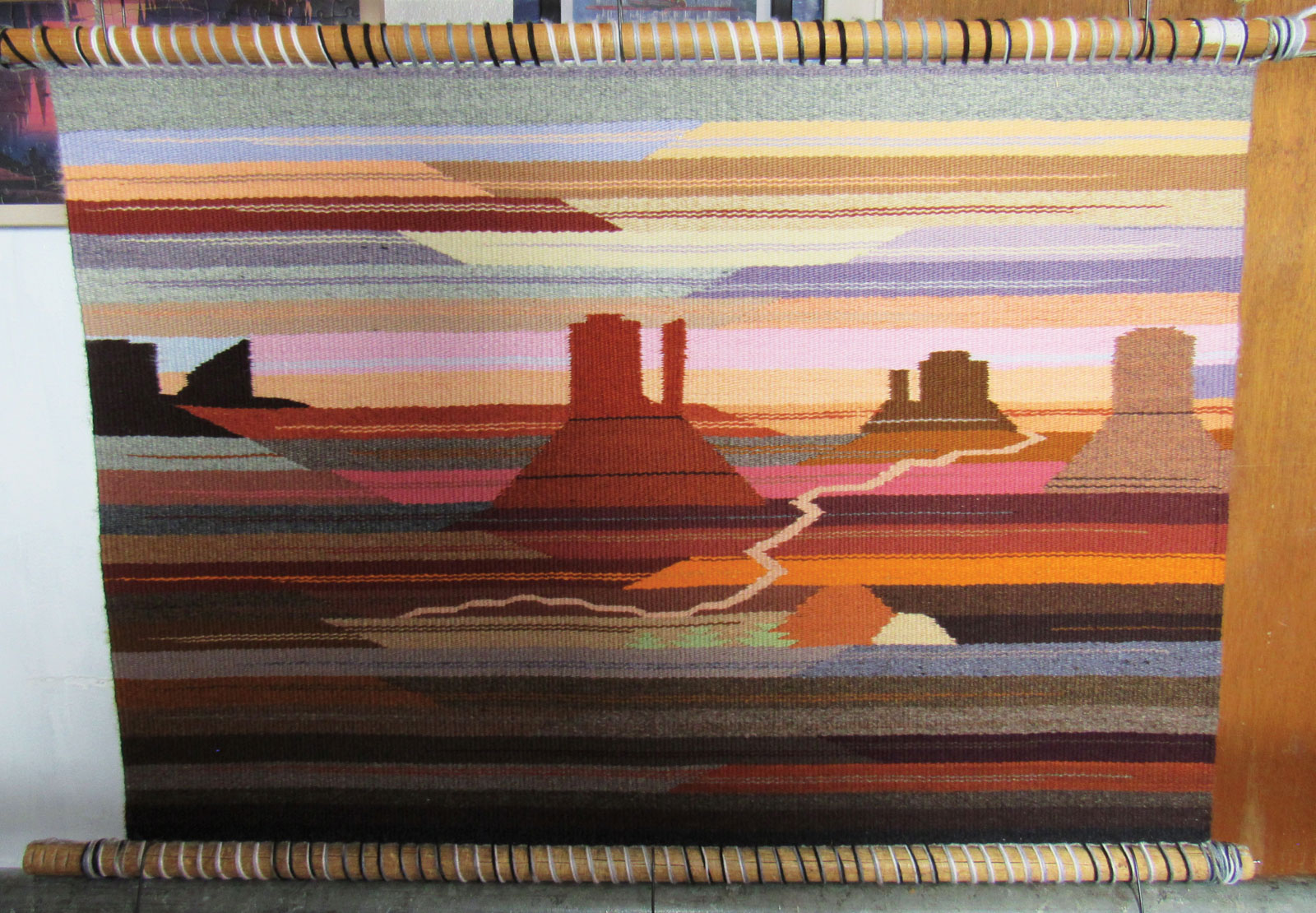 Charlene Laughing (Navajo (Diné)), Monument Valley Landscape, 30 x 20”
Mona learned to weave from her mother when she was in her early 20s. Mona’s mother lost her own mother at an early age, so she learned a lot about life and art from her aunt. There are at least four generations of weavers in the family, but Mona suggests it could be as many as six because no records were kept from earlier than her own childhood. “At first, I helped my mom with her weavings, then I weaved on my own. All those years later and weaving is still all I do. I like to read autobiographies and I used to take care of the animals, but weaving is everything.”
The Laughing family lives on a ranch that is home to a large variety of animals, including chickens, ducks, dogs and cats. The real prize is in their 35 Rambouillet sheep and 20 angora goats. Between the two sets of animals, the Laughings have plenty of material for their weavings. The Rambouillet sheep wool is similar to wool from other sheep, including churro sheep found in Northern Arizona, but the angora mohair is silkier and makes for an exceptionally soft rug when combined with wool.
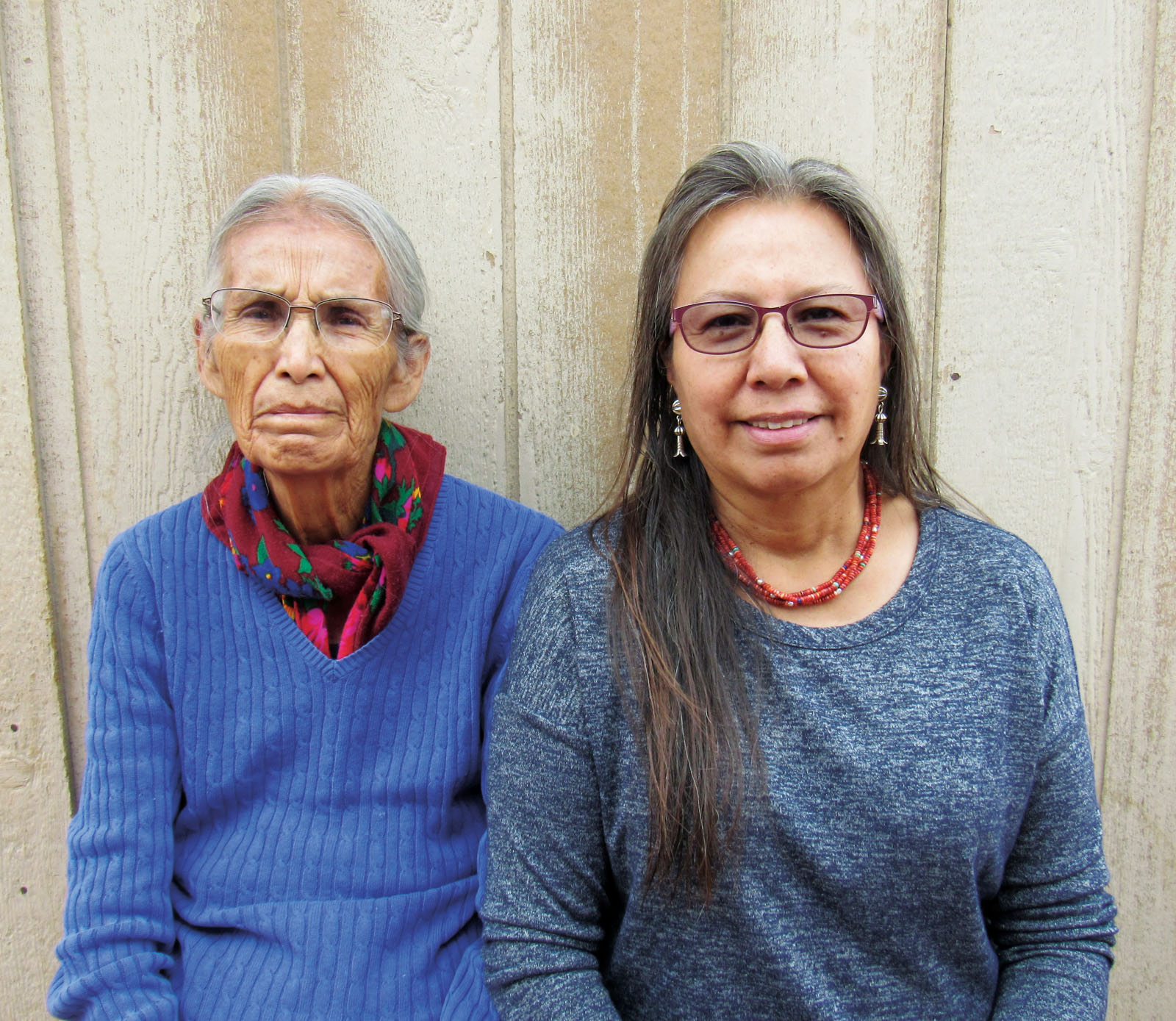 Mona Laughing, left, with her daughter, Charlene Laughing. The weavers will be showing work at the Heard Museum Indian Fair & Market.
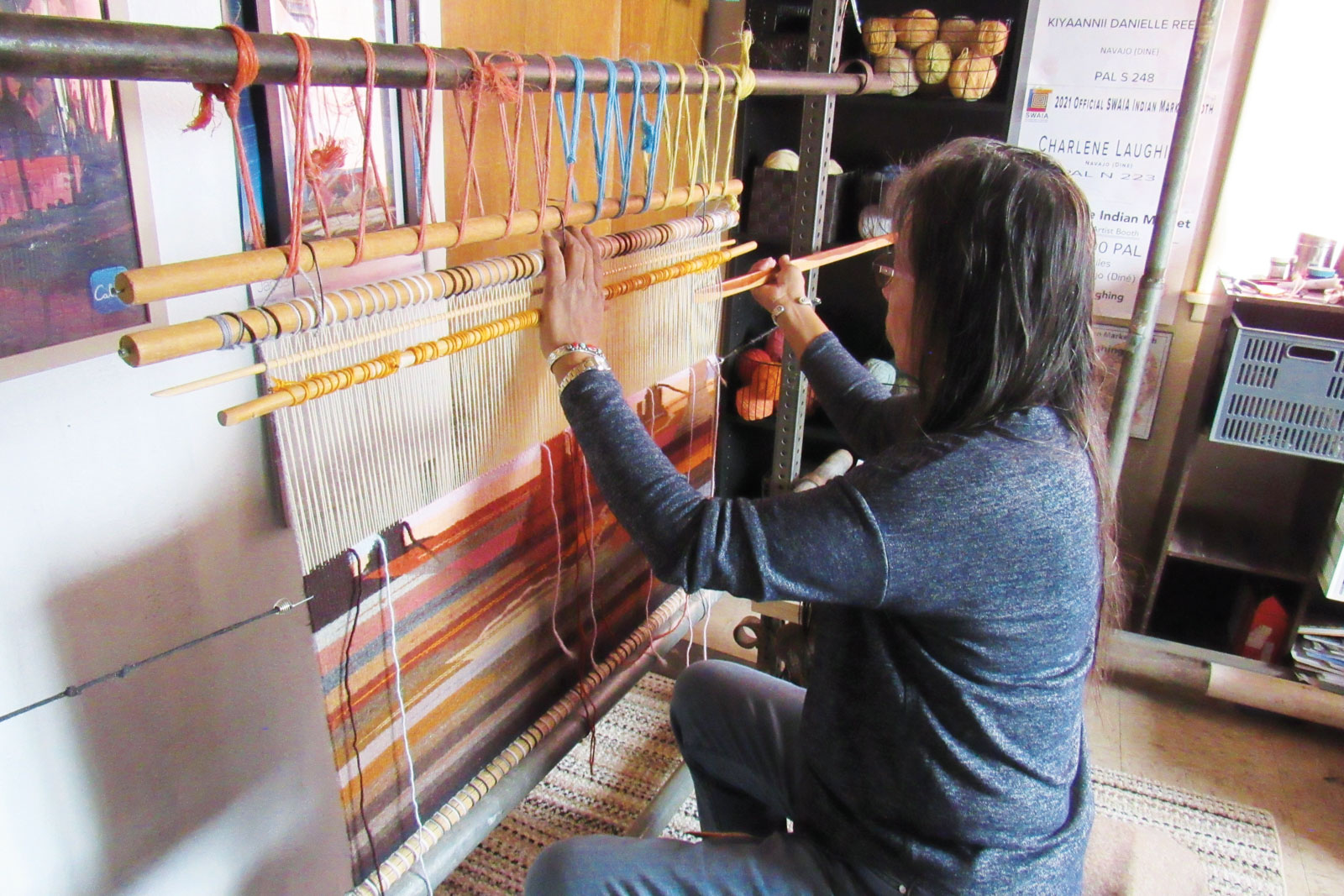 Charlene Laughing works on a weaving in her studio in Crystal, New Mexico.
Asked if they still do the day-to-day care for the sheep and goats, and the shearing that comes with them, Charlene laughs. “Oh no. I’m 55 and my mom is 78. We hire people to do that,” she says.
Once the wool and mohair are sheared, a lot of it ends up in their respective studios, where they process it further—including carding the wool and spinning it into thread—so it can go directly into their weavings. They will also supplement their own stocks with wool purchased from local trading posts.
All of the wool is naturally colored, often with vegetal dyes. The deep browns of their weavings are achieved with walnuts, the greens come from sage, the oranges from tobacco or wild carrots, the yellows from Navajo teas or onion skins, and the pinks and purples originate from red wines. The dying recipes read like cookbooks, with directions that include crushing, mashing, boiling, dicing and soaking.
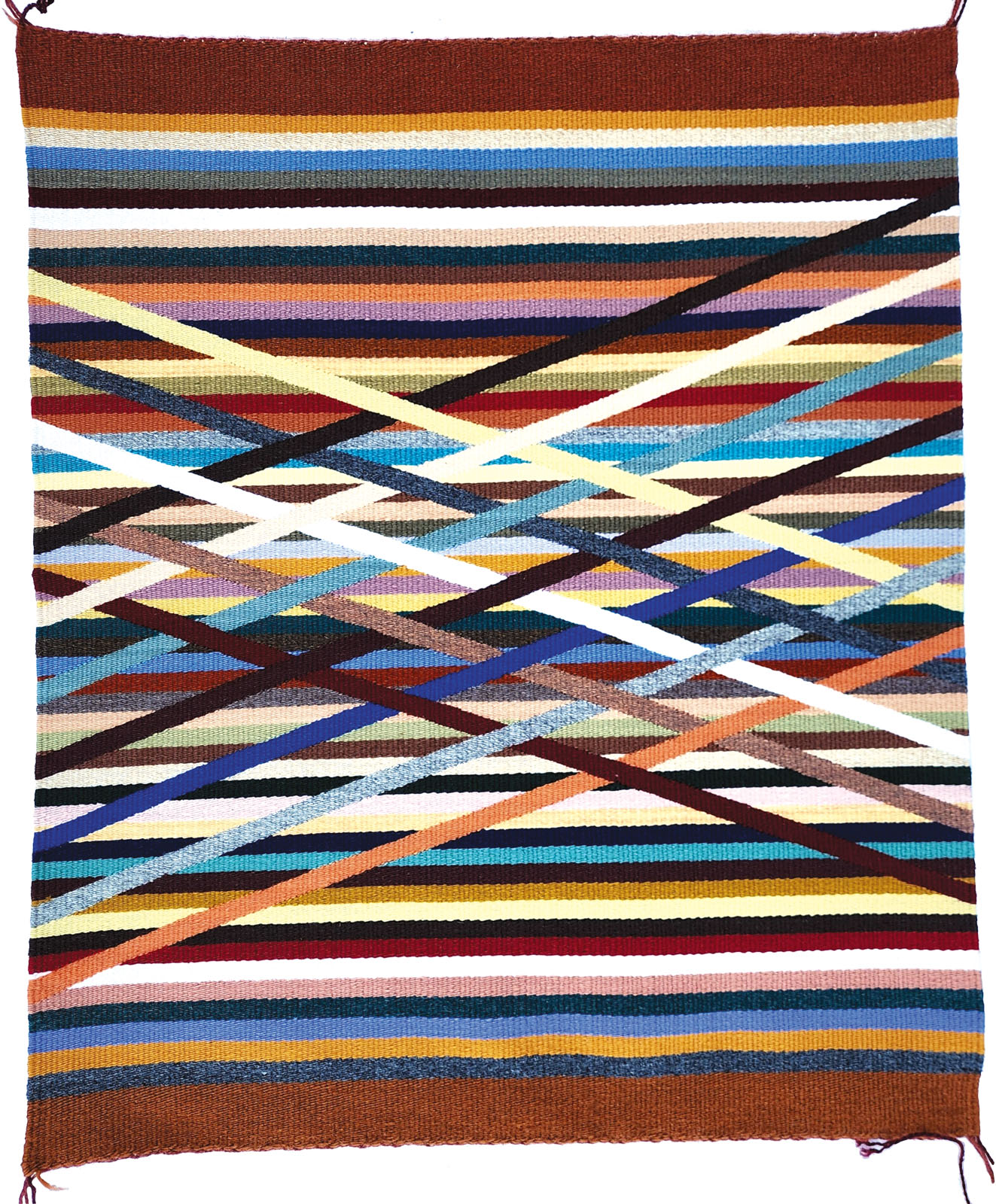 Charlene Laughing (Navajo (Diné)), Criss-Cross Rug, 24 x 24”
For Charlene, she started weaving at 8 years old. She sold her first rug—they refer to their weavings as rugs, not blankets—in Crystal to Don Jensen, who was operating the Crystal Trading Post. That was 1979, and the price that was given for the small rug was $15. “From then on, I picked up weaving very quickly,” Charlene says. “My mom was a big help. She would always encourage me to keep my sides straight. I practiced a lot and got better.”
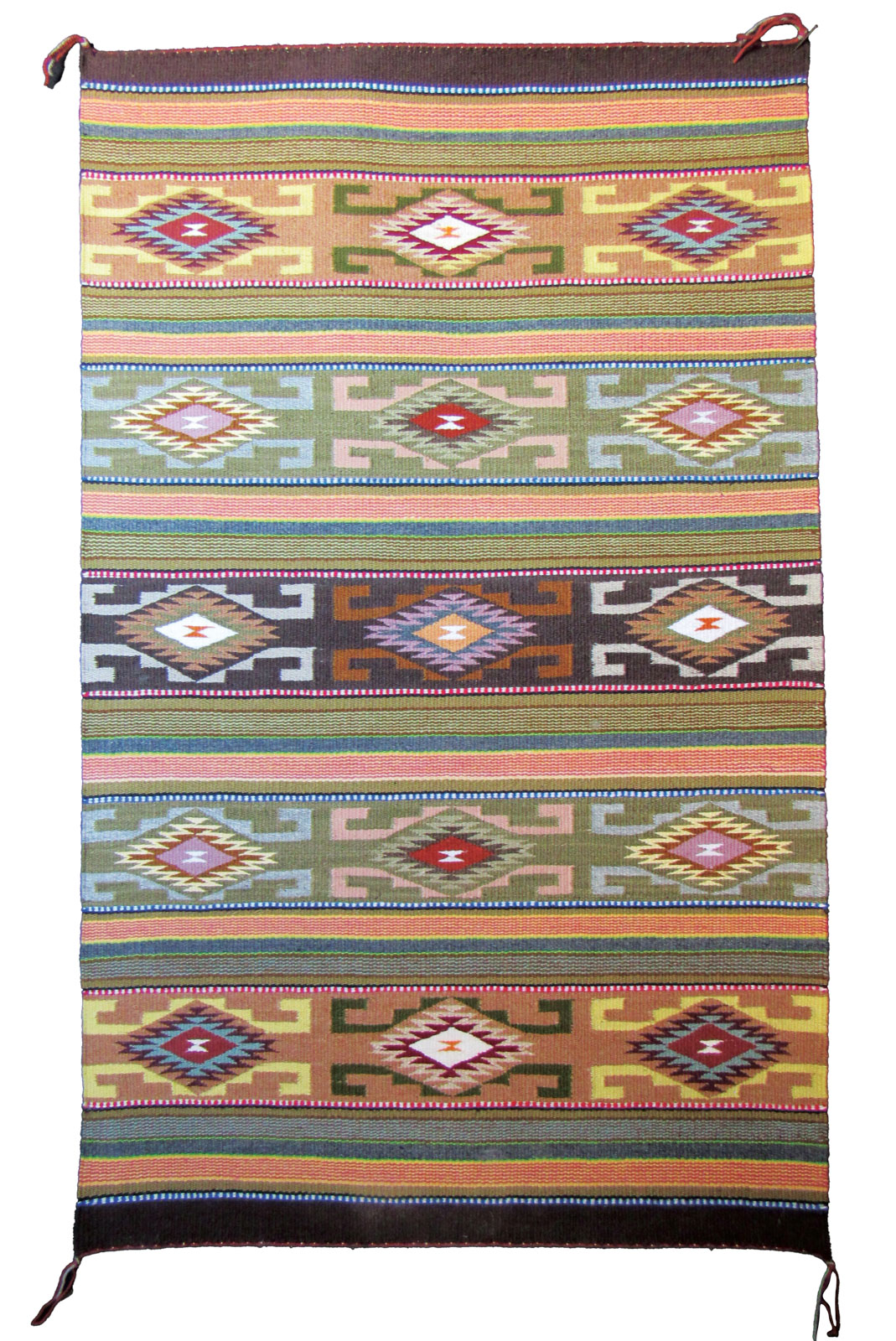 Mona Laughing (Navajo (Diné)), Vegetal Crystal Rug, 32 x 50”
Mona and Charlene both consider themselves Crystal weavers because they have fully adopted, and also adapted, the Crystal Trading Post regional style. Known for its earthy tones and geometric designs, the Crystal style was greatly influenced by J.B. Moore, the founder of the Crystal Trading Post, which opened in 1896. After establishing the post, Moore would supply wool and dyes to his stable of artists to produce Crystal-style weavings. The post has long been closed, and Moore’s role in taking advantage of Native American artists has been called out by contemporary experts, but there is no question that the Crystal style marked an important period for Native American weaving in the early 20th century. Over the decades, artists continued to adapt the design, which created a fluid evolution to the present day.
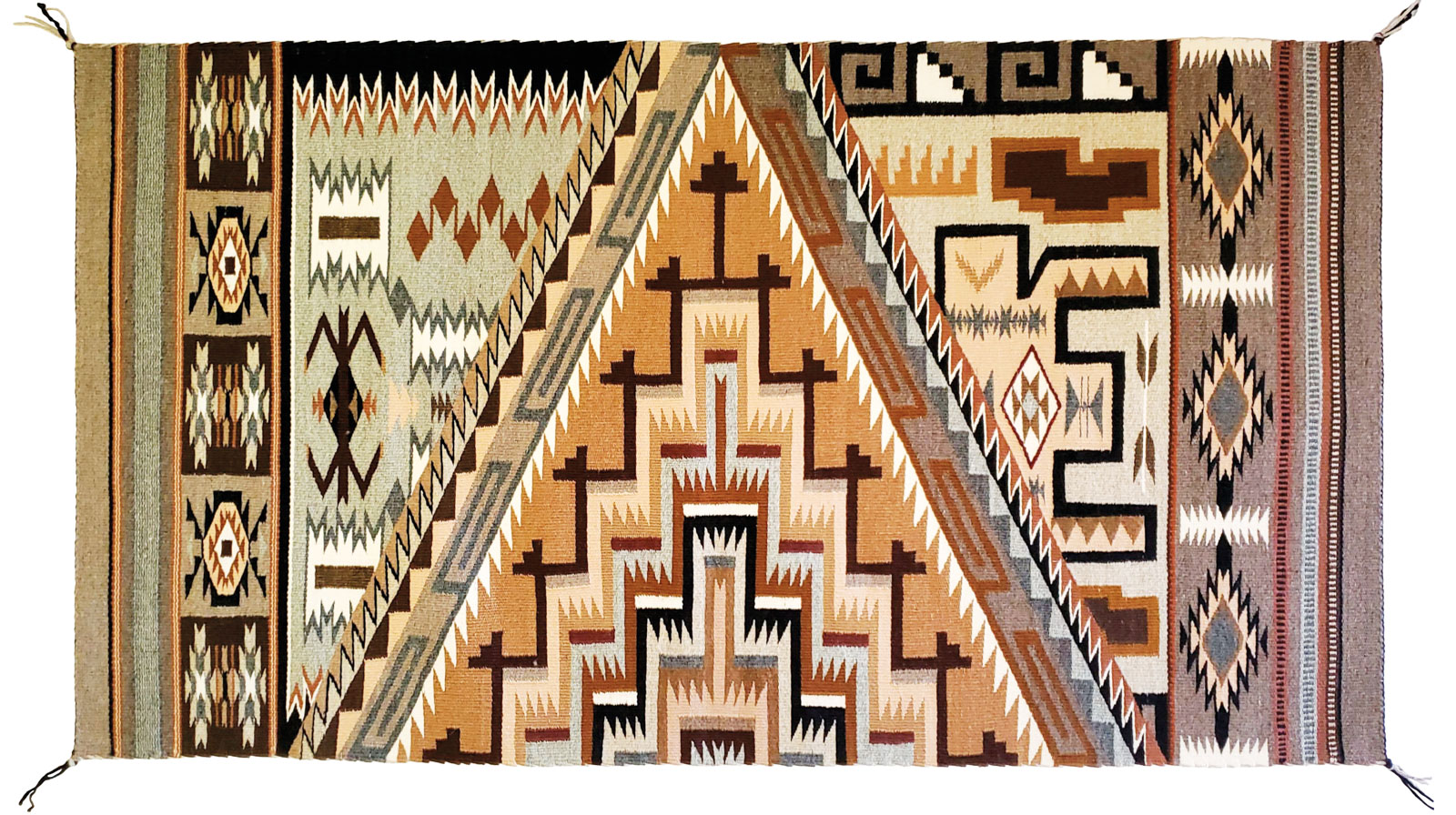 Mona Laughing (Navajo (Diné)), Blue Canyon Rug, 32 x 50”
“We’re from Crystal so we weave Crystal designs,” Charlene says. “For a long time, I did nothing but stripes, but then I also did other kinds of styles, including Wide Ruins. There is a lot of history in that area, although not many people are really weaving Crystal rugs these days. My mom has 12 grandkids and only three of them weave. It’s a dying art.”
Some of the weavings that the Laughings will be bringing to the Heard market include their Crystal rugs, but also pieces that show different styles, from Two Grey Hills to Ganado to Wide Ruins and beyond. Some of Mona’s work is quite complex with twisted three-dimensional objects, while Charlene does Crystal rugs alongside abstracted landscapes of Monument Valley.
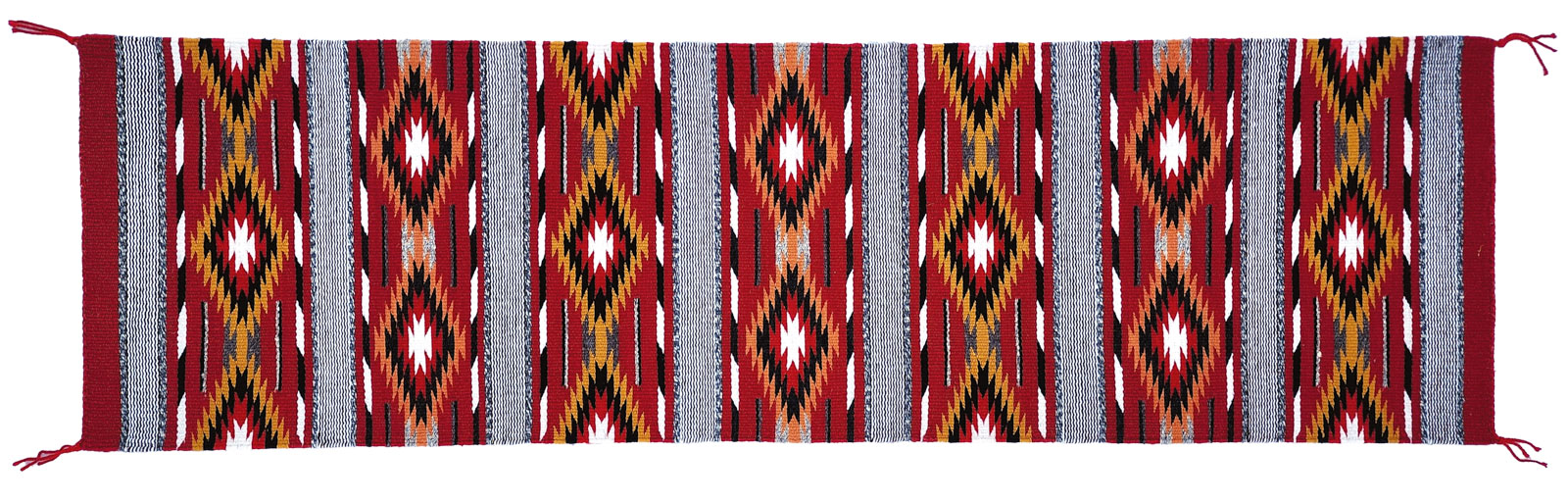 Charlene Laughing (Navajo (Diné)), Crystal Rug with Germantown Colors, 15 x 52”
They look at weaving as the lifeblood of their family. Weaving is their careers, their hobbies, their livelihoods and so much more. “It’s something I’ve grown up with, and it’s been all around me. I grew up with no running water or electricity, but I had weaving. My choices were limited: I could be a sheepherder, a cook or a weaver. It was not a hard choice for me,” Charlene says, adding that she did go to college in Tucson, Arizona, before the birth of her first child. “Since then I’ve always had money. It paid for tuition, rent, piano lessons, basketball camps—it allowed our life to happen. I’m grateful for it, which is why I enjoy it so much even still today.”
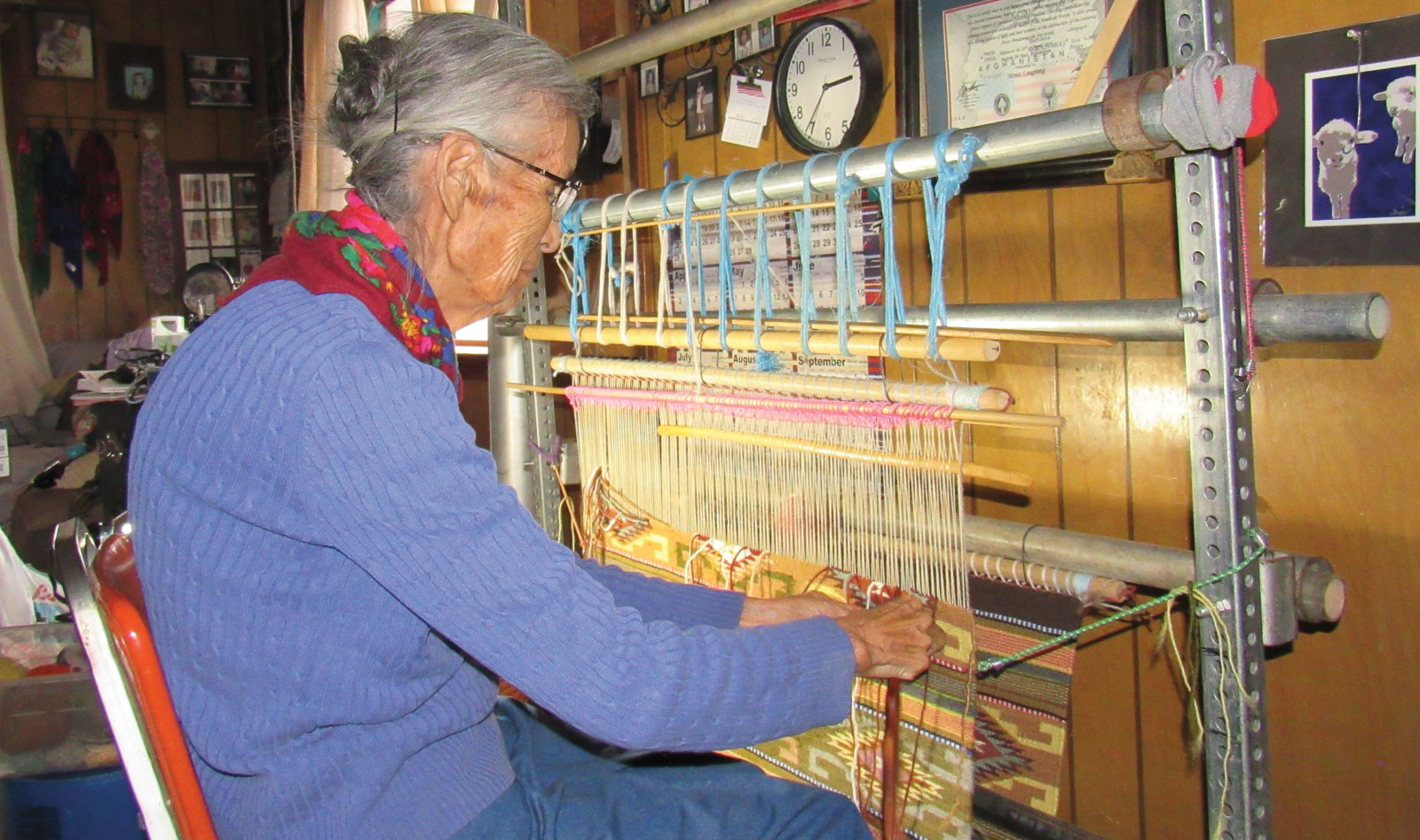 Mona Laughing in her studio in Crystal, New Mexico.
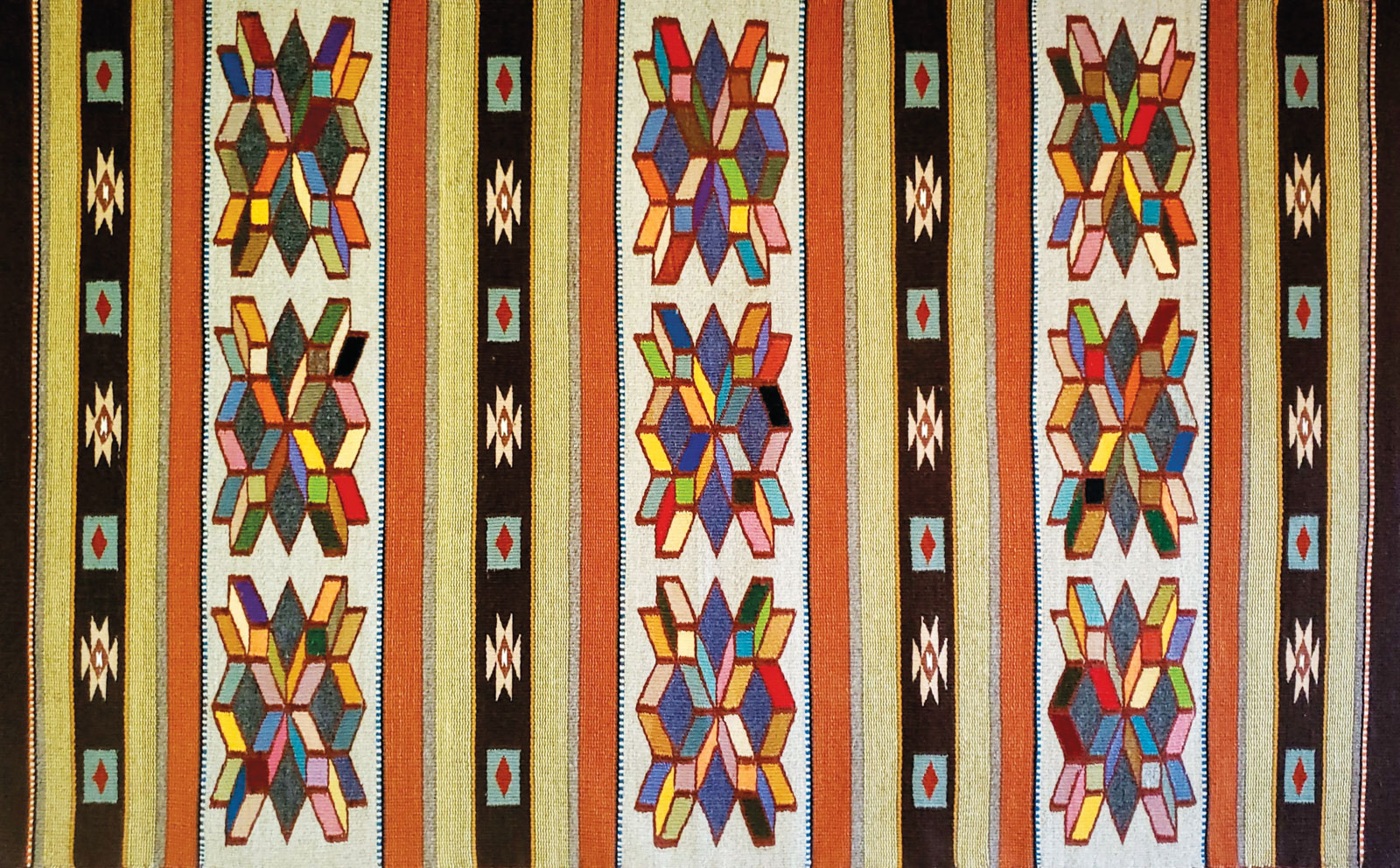 Mona Laughing (Navajo (Diné)), Koleidoscope, 36 x 60”
Mona echoes those sentiments but also adds how important it is that these regional styles, like Crystal rugs, be made today by living weavers, and in the future by weavers who are not yet at their looms. “I like to think I’m preserving this style of weaving for later generations,” she says. “Crystal rugs are an important part of our history.”
Mona and Charlene Laughing will be showing their work at Booth B-44 at the Heard Museum Guild Indian Fair & Market.
Powered by Froala Editor